


Welcome back to National Parks and other public lands with T!
Aloha➢
My family and I took a cruise around the Hawaiian islands in 2019. We embarked in Honolulu on the island of Oahu. Prior to embarkation, we spent a few days on land and explored Oahu. Using Hilton’s Hawaiian Village as our base, we enjoyed visiting many interesting sites before boarding the Pride of America. We spent a week on board cruising the Hawaiian Islands. Our first port of call was Kahului Harbor on Maui, followed by the big island of Hawaiʻi. Our last port before returning to Oahu was Kauai.
We stayed two days in Kauai. We spent the two days touring the island with stops at Wailua Falls, Lihue Plantation tubing, ʻŌpaekaʻa Falls, Wailua River State Park, Mount Waiʻaleʻale, Fuji Beach, Moloa’a Beach, Kīlauea Point National Wildlife Refuge, Hanalei National Wildlife Refuge, Wai’oli Hui’ia Church, Ninini Point Lighthouse, Waimea Canyon State Park, Kōkeʻe State Park, Russian Fort Elizabeth State Historical Park, Hanapepe Swinging Bridge, Koloa Heritage Trail and Nā Pali Coast State Wilderness Park.
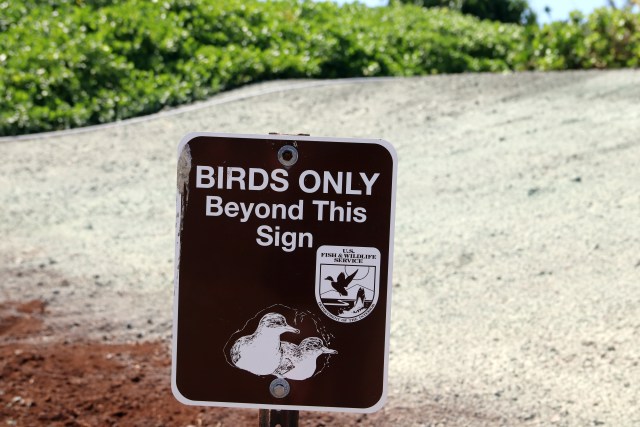
Kīlauea Point National Wildlife Refuge in Kauai was established in 1985 by transferring the land from the the US Coast Guard which operated the lighthouse on Kīlauea Point. Its mission is to protect seabird nesting colonies. The refuge was expanded to Mōkōlea Point in 1988 and now encompasses 203 acres.

The signs on the refuge highlight six birds: The Great Frigatebird, Red and White Tailed Tropicbirds, Laysan Albatross, Red-Footed Booby, Wedge-tailed Shearwaters and the Hawaiian Goose (Nēnē.)

There were hundreds of birds everywhere we looked. We saw the Tropicbirds dancing over the little island just north of the point and captured a Booby carrying branches back to its nest.

The Nēnē is Hawaii’s state bird and is endangered. They evolved from the larger (and nastier) Canada Goose about 500,000 years ago. They disappeared from Kauai a century ago, but were reintroduced through the wildlife refuge in 1990. We saw them running all over the lawn by the lighthouse.

The Wildlife Refuge has worked to restore the natural flora by removing alien species and reintroducing native plants. They rely on a large volunteer corp of about 150 to maintain the refuge.

Kauai Posts➢
- Wailua Falls
- Lihue Plantation Hanama‘ulu Ditch
- ʻŌpaekaʻa Falls
- Wailua River State Park
- Mount Waiʻaleʻale
- Fuji Beach
- Moloa’a Beach
- Kīlauea Point National Wildlife Refuge
- Kīlauea Lighthouse
- Hanalei National Wildlife Refuge
- Wai’oli Hui’ia Church
- NININI POINT LIGHTHOUSE
- Waimea Canyon State Park: Red Dirt Falls
- Waimea Canyon State Park: Waimea Canyon Lookout
- Waimea Canyon State Park: Waipo’o Falls
- Kōkeʻe State Park: Kalalau Lookout
- Kōkeʻe State Park: Pu’u O Kila Lookout
- Russian Fort Elizabeth State Historical Park
- Hanapepe Swinging Bridge
- Spouting Horn
- Koloa Heritage Trail: Spouting Horn
- Koloa Heritage Trail: Keoneloa Bay
- Nā Pali Coast State Wilderness Park


Location: 3580 Kilauea Rd, Kilauea, Hawaii
Designation: National Wildlife Refuge
Date designated/established: 1985
Date of my visit: April 18, 2019
You must be logged in to post a comment.